



Hollywood Walk of Fame with Polish Accents

Share

Although the Hollywood Walk of Fame is most commonly associated with American cinema and pop culture, Poles also hold a lasting place in this global pantheon of fame—artists and creators who made significant contributions to the history of music and film, marking a distinct Polish presence in the very heart of Hollywood.
An Icon of Global Pop Culture
The Hollywood Walk of Fame is one of the most recognizable landmarks in the United States and a symbol of film history. Established in 1960 in Los Angeles, it stretches for approximately 3 kilometers. It features more than 2,800 terrazzo-and-brass stars embedded in the sidewalks. Each star commemorates achievements in the entertainment industry, including film, television, music, radio, live performance, and sports entertainment.
Origins and Development of the Walk of Fame
The idea emerged in the early 1950s at the initiative of the Hollywood Chamber of Commerce to revitalize the Hollywood district and honor its creative heritage. The first permanent star was unveiled in 1960. Since then, the Walk has steadily expanded, adding an average of about thirty new stars each year. Today, it attracts around ten million visitors annually, making it one of the most popular tourist attractions in the United States.
Stars of the Stars
Each five-pointed pink star bears the name of the honoree along with a symbol representing the category in which they were recognized. While most stars are dedicated to individuals, the Walk of Fame also includes fictional characters, animals, groups, and organizations, such as Mickey Mouse, Lassie, the Apollo 11 astronauts, and the Los Angeles Dodgers. Some artists hold more than one star for achievements in different fields; Gene Autry remains the only person honored in all five categories.
Polish Traces in the Heart of Hollywood
Among those who have their own stars on the Walk of Fame are also Poles. They include Ignacy Jan Paderewski—an outstanding composer, pianist, and Prime Minister of Poland—who is honored in the music category. Pola Negri (Apolonia Chałupiec), one of the greatest stars of silent cinema, also has her star; her international career began in Europe and flourished in Hollywood. The Walk of Fame also commemorates Ryszard Bolesławski, a director, actor, and co-founder of the American School of Acting. In addition, stars honor individuals of Polish descent who played an essential role in the history of American popular culture.
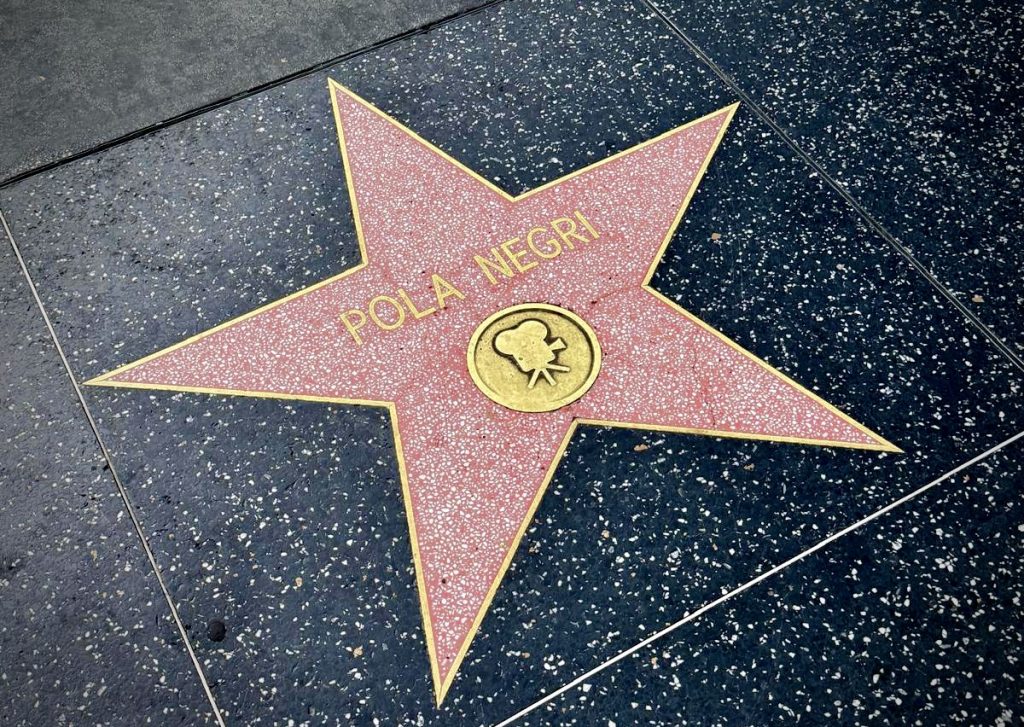
The star of Pola Negri. Photo: ks. Paweł Rytel-andrianik, Family News Service
Controversies and Contemporary Challenges
Despite its fame, the Walk of Fame is sometimes criticized for overcrowding, acts of vandalism, and urban problems in the area around Hollywood Boulevard. At the same time, renovation work and initiatives to improve the site’s aesthetics and safety are ongoing.
Global Heritage and Inspiration
The influence of the Hollywood Walk of Fame is global—it has inspired similar “walks of fame” in cities around the world, from London to Hong Kong, as well as in Łódź, where a star dedicated to Pola Negri can be found. The Hollywood Walk of Fame remains not only a popular tourist attraction but also a living record of the history and cultural significance of global entertainment.
Family News Service
Text, photos and video Family News Service
ks. Paweł Rytel-Andrianik / Family News Service